Preserving the History of Western Michigan's Federal Branch.
The Historical Society researches, collects, and preserves the legacy of the lawyers, judges, and landmark cases shaping Western Michigan and the Upper Peninsula - promoting a deeper public understanding of our region, the court, and the rule of law.
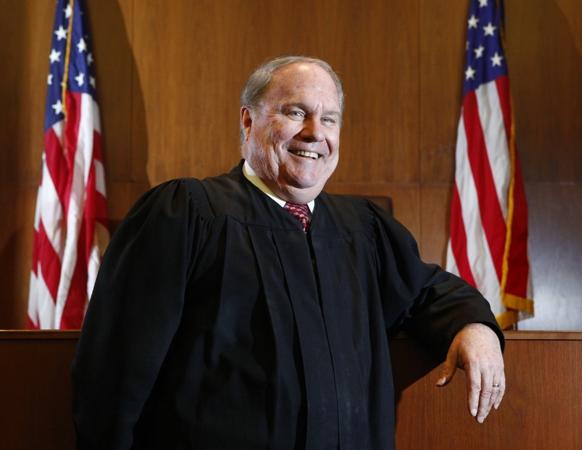
Colleagues and family remember the life and legacy of the Honorable Robert Holmes Bell, who passed away at age 79 on June 8, 2023. Court historian, Hugh W. Brenneman, Jr., introduces a portrait of Judge Bell and tributes from his colleagues and family highlight his life and career.
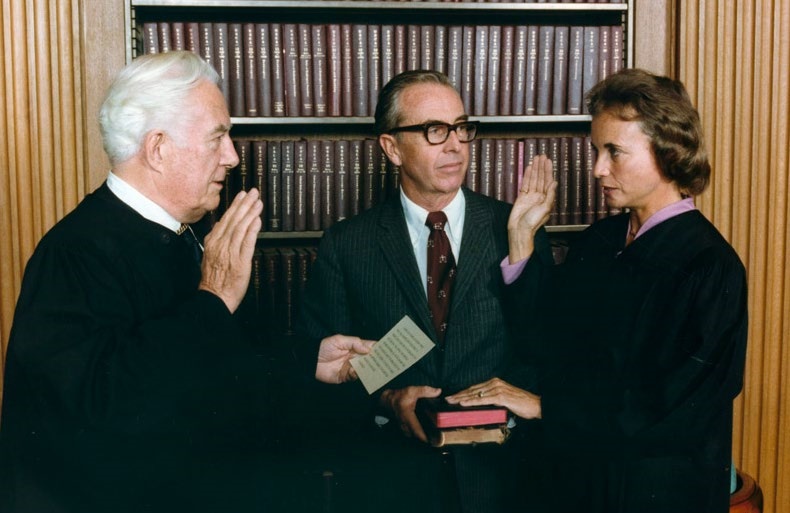
This issue revisits Justice Sandra Day O’Connor’s 1983 visit to Mackinac Island for the Sixth Circuit Judicial Conference. Court historian Hugh Brenneman, Jr. offers a vivid portrait of O’Connor in her early years on and off the Court, weaving together memorable anecdotes from her time on the island and reflections on what that gathering may have quietly foreshadowed.
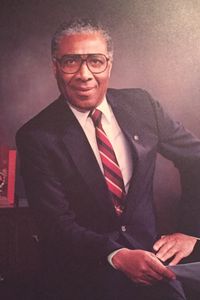
The Honorable Benjamin F. Gibson, who passed away at age 89 on January 13, 2021, is remembered for a life and legacy that shaped the Western District of Michigan. Known as “The Gentleman Judge,” he served on the District Court through the 1980s and much of the 1990s. He is recalled both for the dignity with which he carried out his judicial duties and for the many racial barriers he overcame along the way.
In the early 1930s, Grand Rapids patent attorney Frank Liverance cross‑examined General Billy Mitchell in a dispute over a system for launching and recovering airplanes from dirigibles. Both Willis Perkins and Raymond Sperry, heir to the Sperry Instrument Company, claimed the invention, though the patent ultimately went to Sperry after his death. The Navy dirigibles that used the system later crashed, ending any commercial future for dirigible aviation.
In 1914, Grand Rapids briefly became the center of baseball’s off‑field drama when the Chicago Whales arrived in federal court to stop catcher Bill Killefer from returning to the Philadelphia Phillies. The dispute unfolded against the backdrop of baseball’s reserve clause, a rule that bound players to their teams and fueled tension as the upstart Federal League lured talent away with promises of better pay. Judge Clarence W. Sessions heard a full day of arguments before refusing to block Killefer’s move, finding that the Whales had enticed him away from his prior commitment and thus came to court without “clean hands.” The case became one of the defining clashes of the Federal League era, a moment when Grand Rapids briefly stood at the crossroads of baseball’s battle for control.
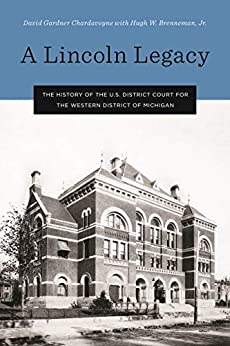
by David Gardner Chardavoyne with Hugh W. Brenneman, Jr.
A Lincoln Legacy provides the first and only comprehensive examination of the history of the federal courts of Western Michigan. It will appeal to those learning and practicing law, as well as those with an interest in Michigan history.